Let’s Rethink Strategic Collaboration Part 2: Building Relationships in a Time of Upheaval
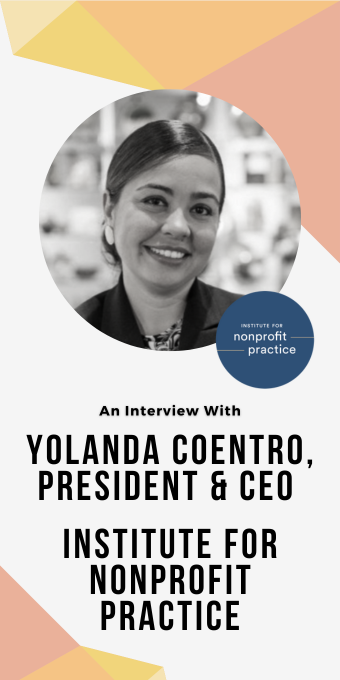
In Part 1 of our conversation with Yolanda Coentro, President & CEO of the Institute for Nonprofit Practice, we focused on asset and program transfers — why they might make sense and how they can benefit both the organization handing off the work and the one taking it on.
In the second part of our conversation, we discussed how an organization can make the decision whether a strategic partnership makes sense in today’s unpredictable world.
With everything going on — from the lingering effects of the pandemic to political instability and challenges to the social sector — nonprofit leaders are facing tough choices. But even in calmer times, thinking about collaboration should be part of your organization’s regular conversations. Getting comfortable with these discussions now means you’ll be better prepared when the pressure’s on.
Let’s Talk About Adaptability
We’ve all heard it: culture matters. And over the past five years, it’s become crystal clear that having a culture that embraces change is key to surviving — and thriving — through uncertainty.
If your organization is already open to change, that’s great. Now’s the time to double down and make sure your team still feels that way. If not, don’t worry — it’s never too late to start building that adaptability muscle.
So, how do you begin? Start by asking your team. Reflect together: How did we pivot during the pandemic? What did we learn from racial justice movements? How did we keep going while navigating political challenges? You might be surprised by how much resilience and creativity you’ve already shown.
Share those stories. Use them to build a shared understanding of what adaptability looks like in your organization. And don’t feel like you need a months-long culture overhaul. Instead, try quick wins: send out a short survey, host a few small group chats, and weave these conversations into your regular meetings. It’s not perfect, but it’s a solid start — and it helps bring people together.
Use Data to Guide You
Let’s face it: the world isn’t getting any more predictable. Between climate change, AI, and political chaos, it’s hard to know what’s coming next. That’s why making fast decisions is important — but making smart, informed decisions is even more critical.
Take strategic planning, for example. You don’t need a six-month process to make good choices. Tools like scenario planning (check out Nonprofit Scenario Planning in an Age of Chaos) can help you move quickly while still using solid data.
The same goes for partnerships. Whether you’re thinking about a merger or something less formal, start by gathering the right people — your board and key staff — and ask the right questions:
- What’s really getting in the way of our mission and sustainability?
- Could a partnership help us tackle those challenges?
- What are our strengths and gaps in our business model?
- What values define our culture, and what kind of alignment do we need?
- Who are the organizations that might be a good fit?
It might sound like a lot, but with some prep, you can cover most of this in a focused half-day meeting. And when you sit down with a potential partner, come with a plan. Know what kind of relationship you’re envisioning. Have ideas about which programs or operations could be stronger together. That way, you’re not starting from scratch — you’re starting with purpose.
Time to Act
Sometimes, transferring a few key programs or administrative functions is the smartest move. As Yolanda Coentro shared in our interview, this kind of collaboration can be a powerful way to build strength, without diving straight into a full merger. It might even be a first step toward deeper integration down the road. Or maybe it’s enough on its own. Either way, it’s about finding what works best for your organization right now.
Of course, not every situation calls for a fast-track process. But when the moment is right — and when you’ve done the homework — a streamlined, data-informed approach can help you move forward with confidence.
Bottom line: Talk to your team. Trust their insights. Recognize how adaptable you already are. Use data to make smart decisions. And most importantly — don’t wait. The time to act is now.
Comment section
1 thought on “Let’s Rethink Strategic Collaboration Part 2: Building Relationships in a Time of Upheaval”